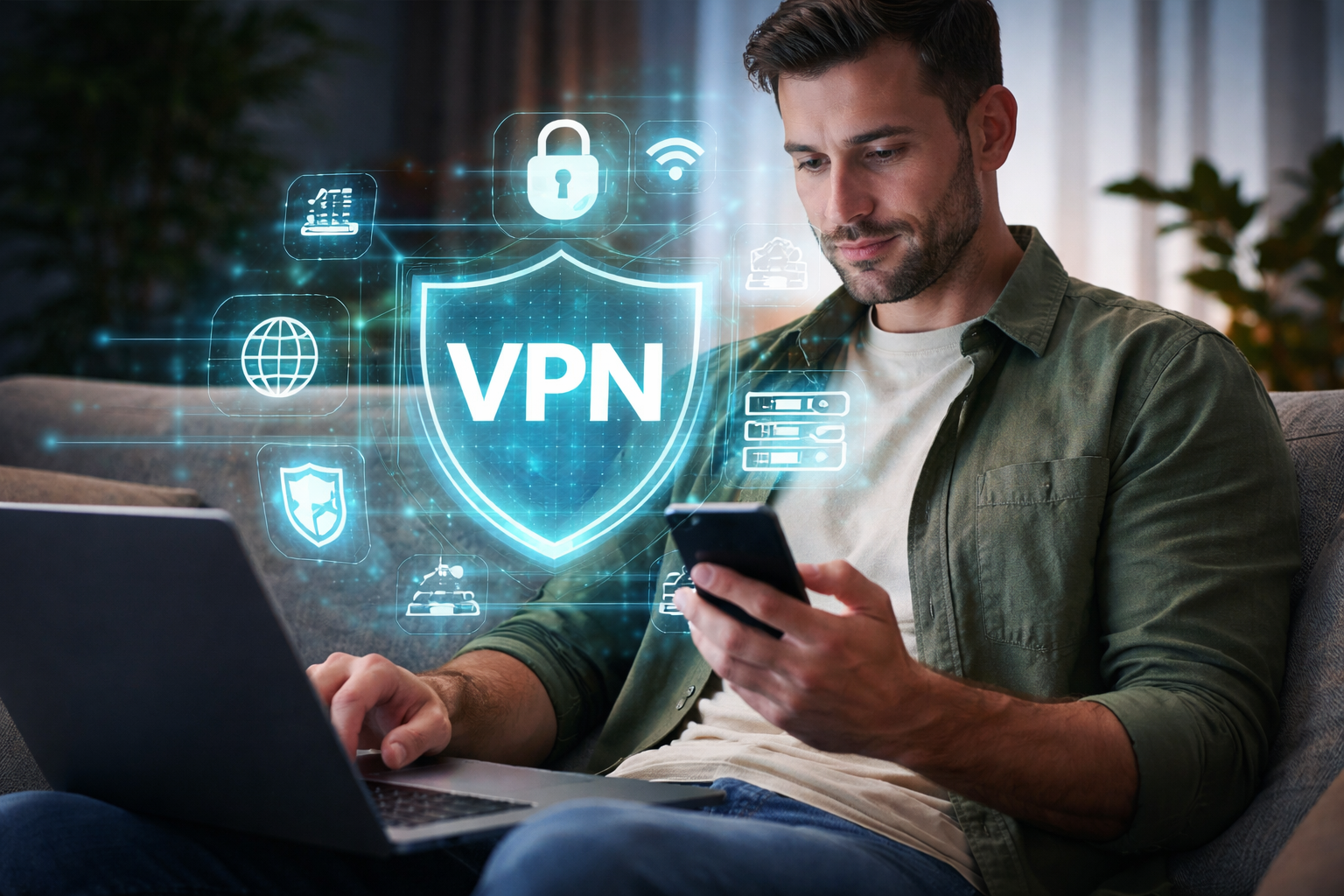
How a VPN Helps Protect Your Freedom and Security Online
Browse the internet with fewer restrictions using a secure VPN connection. A VPN encrypts your traffic and helps you access geo-restricted content while keeping your online activity private. This allows you to use social media platforms, communication services, and streaming websites more safely and without unnecessary exposure.
Regain More Control Over Your Internet Experience
A reliable VPN lets you change your IP address by connecting through servers in different locations around the world. This helps you access websites or online content that may be limited due to regional restrictions while maintaining a secure browsing environment.
By encrypting your connection, a VPN protects your data from monitoring by third parties, including network providers or potential attackers on public networks. Many modern VPN services also follow strict no-logs principles, meaning your browsing activity is not stored or tracked.
Using a VPN adds an extra layer of privacy and security, helping you browse, stream, and communicate online with greater confidence.
How can you tell if your VPN is working correctly?
To make sure your VPN is functioning as intended, it’s important to run a few simple checks. Testing different aspects of your connection helps confirm that your data remains private and your location is properly protected.
1. Verify your VPN connection status
Before running any tests, confirm that your VPN is actively connected. Most apps clearly display a Connected status. If the connection drops, your traffic may no longer be protected.
2. Check whether your IP address has changed
One of the main purposes of a VPN is masking your real IP address. Compare your IP before enabling the VPN and after connecting. If both addresses remain the same, the VPN may not be routing your traffic correctly.
3. Test for DNS leaks
DNS requests normally pass through your internet provider, allowing them to see which websites you visit. A properly configured VPN encrypts these requests and sends them through secure servers. If DNS queries still reach your ISP, your browsing activity could be exposed, so running a DNS leak test is essential.
4. Look for WebRTC leaks
Some browsers include WebRTC technology used for video calls and real-time communication. In certain cases, it can reveal your actual IP address even while a VPN is active. Performing a WebRTC leak test helps confirm that your real location stays hidden.
5. Measure connection speed
Because a VPN encrypts and reroutes traffic, a small speed reduction is normal. However, a major slowdown may indicate server issues or incorrect settings. Running a speed test can help you evaluate overall performance.
6. Check access to restricted services
Many users rely on VPNs to bypass regional limitations. Try accessing a platform known for strict VPN detection, such as popular streaming services. If access fails consistently, your VPN connection may be blocked or misconfigured.
Bypassing Restrictions & Online Access – Help & Services
In recent years, discussions around online content restrictions have become more common across different regions. In some cases, internet providers are required to limit access to certain websites or platforms. While these measures are often presented as protective actions, they can also affect how freely users access information online.
At the same time, limited public debate from major media organizations has raised questions about transparency and digital freedom. For many users, the priority is simple — maintaining open access to information while staying within legal boundaries.
To help users navigate these limitations, we have gathered practical solutions that allow access to restricted websites without advanced technical knowledge or expensive tools. All recommended methods focus on privacy, security, and lawful internet use.
Restore access to blocked websites with a VPN
Alongside several free resources and privacy tools, one of the most effective ways to bypass online restrictions is by using a VPN service. By connecting to servers located in different countries, users can access websites that may otherwise be unavailable from their current location.
Popular services such as AdGuard VPN, Trust.Zone, and ZoogVPN provide user-friendly applications for multiple devices and allow secure connections through international servers. Switching to a different region often helps restore normal access while keeping your traffic encrypted.
Free VPN options — what to consider
Free VPN services also exist, but users should approach them carefully. Some providers may finance their services through advertising or data collection practices. For this reason, it’s important to review privacy policies and choose services that clearly explain how user data is handled.
The safest approach is selecting a VPN provider that prioritizes transparency, minimal data collection, and strong privacy standards, ensuring both accessibility and online security.
Frequently Asked Questions
How can I check whether my VPN is working correctly?
You can verify your VPN connection by using online testing tools that detect IP, DNS, and WebRTC leaks. If the results only display the VPN server’s information — and not your real IP address or DNS requests — your VPN is most likely operating as intended.
Is it still possible to be tracked while using a VPN?
A VPN significantly reduces tracking by masking your IP address and encrypting internet traffic. However, tracking may still occur if the VPN connection fails, leaks data, or if websites identify you through cookies, accounts, or browser fingerprinting.
What should I do if my real IP address is visible?
If you notice that your real IP address is exposed, disconnect from the VPN immediately. Restart the connection, switch servers, or contact customer support for assistance. If the issue persists, it may be safer to consider a more reliable VPN provider.
How can I tell if a VPN is trustworthy?
A reliable VPN should pass leak tests, use modern encryption standards, and clearly explain its privacy practices. Providers that follow a strict no-logs policy and maintain transparency about their infrastructure and security audits are generally considered safer choices.
Copyright 2026 VPN Test Lab